
What happened#
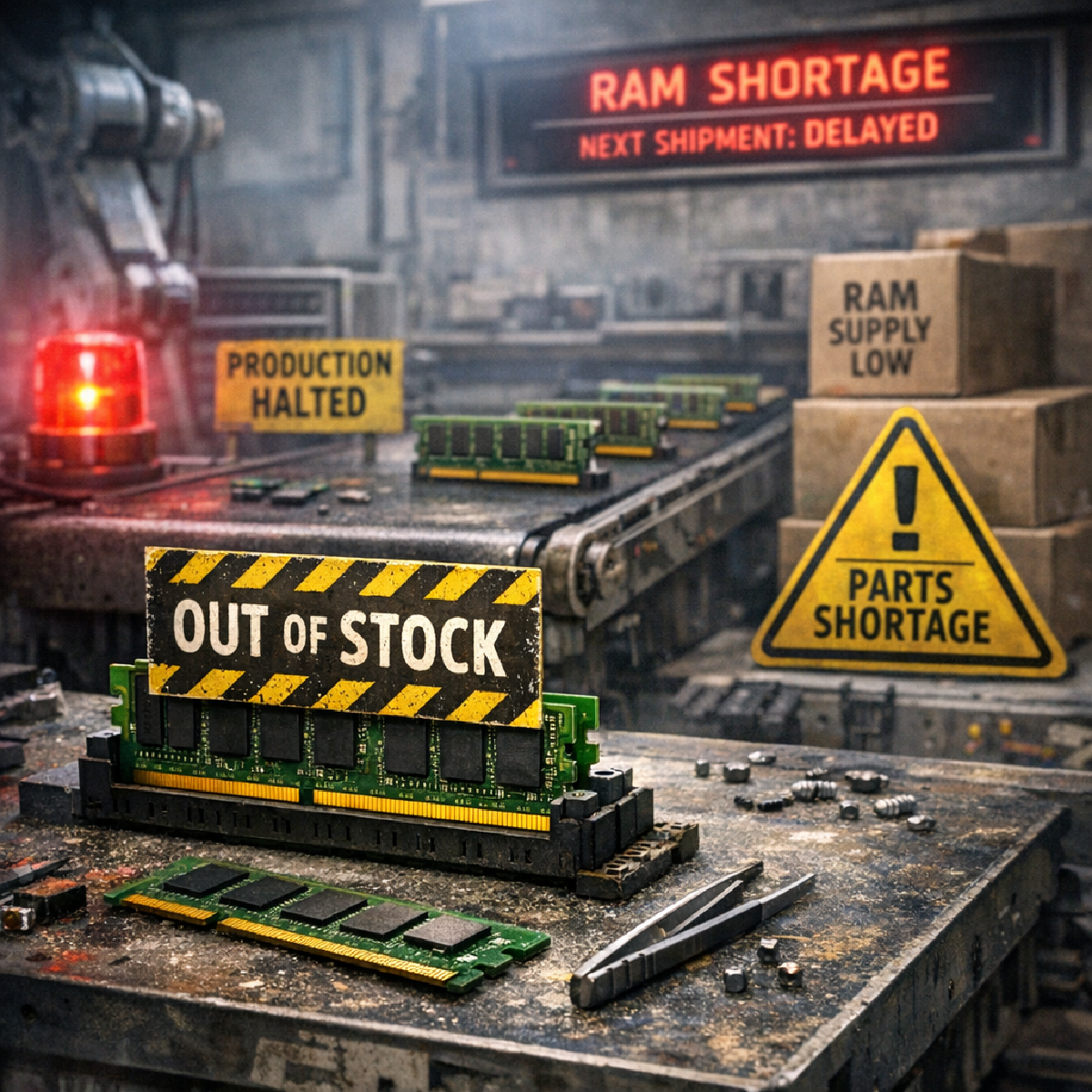
Memory prices have surged approximately 90% in Q1 2026 compared to Q4 2025, according to Counterpoint Technology Market Research. TrendForce expects DRAM contract prices to climb 90-95% in Q1 2026, with NAND flash up 55-60% in the same period. The shortage stems from the three largest RAM manufacturers—Samsung Electronics, SK Hynix, and Micron Technology, who control 93% of the market—prioritizing high-bandwidth memory production for AI data centers.
Data centers now consume an estimated 70% of all memory chips produced worldwide, driven by hyperscale cloud providers including Microsoft, Google, Meta, and Amazon. IDC analysis shows 2026 DRAM and NAND supply growth at 16% and 17% year-on-year respectively, below historical norms. Micron Technology stated in their December 17, 2025 fiscal Q1 2026 earnings call that DRAM supply constraints will persist beyond 2026, with the company expecting to meet only half to two-thirds of customer demand.
High-bandwidth memory production requires a 3-to-1 trade ratio with DDR5, meaning manufacturers must sacrifice three units of consumer RAM to produce one unit of HBM for AI servers. This trade ratio only increases with future HBM generations.
Key details#
| Detail | Value |
|---|---|
| Q1 2026 memory price increase | ~90% vs Q4 2025 |
| DRAM contract price increase (TrendForce) | 90-95% Q1 2026 |
| NAND flash price increase (TrendForce) | 55-60% Q1 2026 |
| Data center memory consumption | 70% of global production |
| Market concentration | Samsung, SK Hynix, Micron: 93% share |
| 2026 DRAM supply growth (IDC) | 16% year-on-year |
| 2026 NAND supply growth (IDC) | 17% year-on-year |
| Micron demand fulfillment | 50-67% of customer orders |
| HBM production trade-off | 3:1 ratio with DDR5 |
Why it matters for developers#
PC vendors Lenovo, Dell, HP, Acer, and ASUS have warned of 15-20% price hikes and contract resets as an industry-wide response. Workstation and development laptop configurations will cost significantly more, particularly for builds requiring 32GB or 64GB RAM. New flagship smartphone models in 2026 are likely to have no RAM upgrades, sticking to 12GB for Pro models rather than increasing to 16GB as previously expected.
Microsoft’s Copilot+ PCs require a minimum of 16GB RAM, and that baseline configuration now costs substantially more than equivalent 2025 models. Crucial consumer memory products will be discontinued after late February 2026 (end of Micron’s fiscal Q2 2026), though Micron’s enterprise portfolio remains available via commercial and server-focused channels. This means fewer retail options for DIY builds and developer workstation upgrades.
Gartner and IDC expect the worldwide PC market to decline 10-11% and smartphone market to decline 8-9% in 2026, driven primarily by higher memory costs making devices less affordable. For developers budgeting hardware purchases, current inventory represents better value than waiting for prices to normalize.
Availability and pricing#
Memory prices vary by vendor and configuration. PC vendors have announced 15-20% price increases across their product lines. Crucial consumer products are discontinued after late February 2026, with enterprise Micron memory remaining available through commercial channels only. Specific pricing for individual configurations has not been uniformly announced across manufacturers.
What to watch next#
Memory shortages will persist well into 2027, with prices expected to ease beginning in 2028 but unlikely to return to 2025 levels. Developers planning workstation upgrades should monitor whether manufacturers adjust AI server production targets or expand fab capacity. The shortage may also accelerate development of memory-efficient coding practices and optimization tools as higher RAM costs make bloated applications more expensive to deploy.